A very inspiring guy who has traveled all around the world, sharing his life story and his positive outlook on life with millions of people, speaking to a range of different groups such as students, teachers, youth, businessmen and women and entrepreneurs.
Have you heard his story yet?
If you haven't check out the video below and I challenge you not to be inspired!!
Monday, 14 February 2011

Sunday, 13 February 2011
The Art Of Origami and Poinsettia's
The art of Origami originates Japanese folk art which began in the 17th century AD. It all started by me wanting to buy some Poinsettia (christmas flowers) seeds

but found out they are very rare and most are propagated from cuttings, through this process of research I accidentally stumbled across an excellent video on how to make Origami flowers and came out with some really nice results using old scrap bits of paper and tissue paper to highlight them.
Here is my late night attempt, what do you think?

Tuesday, 1 February 2011
The Bainegramorator

The Bainegramorator
Alexander Bain
1917
Developed by Alexander Bain in late 1800's, the Bainegramorator was indeed a remarkable invention for its time. This power generated mechanical device used coded punch cards, on which the operator could record a voice message which was then sent and decoded using the Bainegramorator.
The Bainegramorator was deployed by the United States Army Signal Corps as a means to deliver messages to the front line in 1917 to counter communication problems. This was however short lived due to the rapid technological advancements in communication which still continues to this day.
Archive footage recovered by the Museum Of Lost Interactions Team
Fact or Fiction?
So some of you might not already know but the Bainegramorator didn't actually exist, this was my 3rd year design project as part of our Museum Of Lost Interactions exhibition.
After researching old audio technology and settling on WW1 as my chosen era.
I developed my main idea based on an old Field phone from a museum in Hemel Hempstead.
The Bainegramorator was deployed by the United States Army Signal Corps as a means to deliver messages to the front line in 1917 to counter communication problems. This was however short lived due to the rapid technological advancements in communication which still continues to this day.
Archive footage recovered by the Museum Of Lost Interactions Team
Fact or Fiction?
So some of you might not already know but the Bainegramorator didn't actually exist, this was my 3rd year design project as part of our Museum Of Lost Interactions exhibition.
After researching old audio technology and settling on WW1 as my chosen era.
I developed my main idea based on an old Field phone from a museum in Hemel Hempstead.

I based the technology story on the way gramophones pick up vibrations by running a stylus across the bumps on the surface of the record. My plan was to reproduce the idea of a stylus running across holes in my punch cards.
The finished artifact at the Museum Of Lost Interactions opening night:


On set filming archive footage:


How it really works?
Now the device may look like an antique communication device from the early 19th century but really its a shell made of scavenged parts filled with modern technology.
Check out the video below to find out how it all works:
I used a arduino, an mp3 trigger, LEDs, LDRS, a speaker and a old wind up torch to run my device.

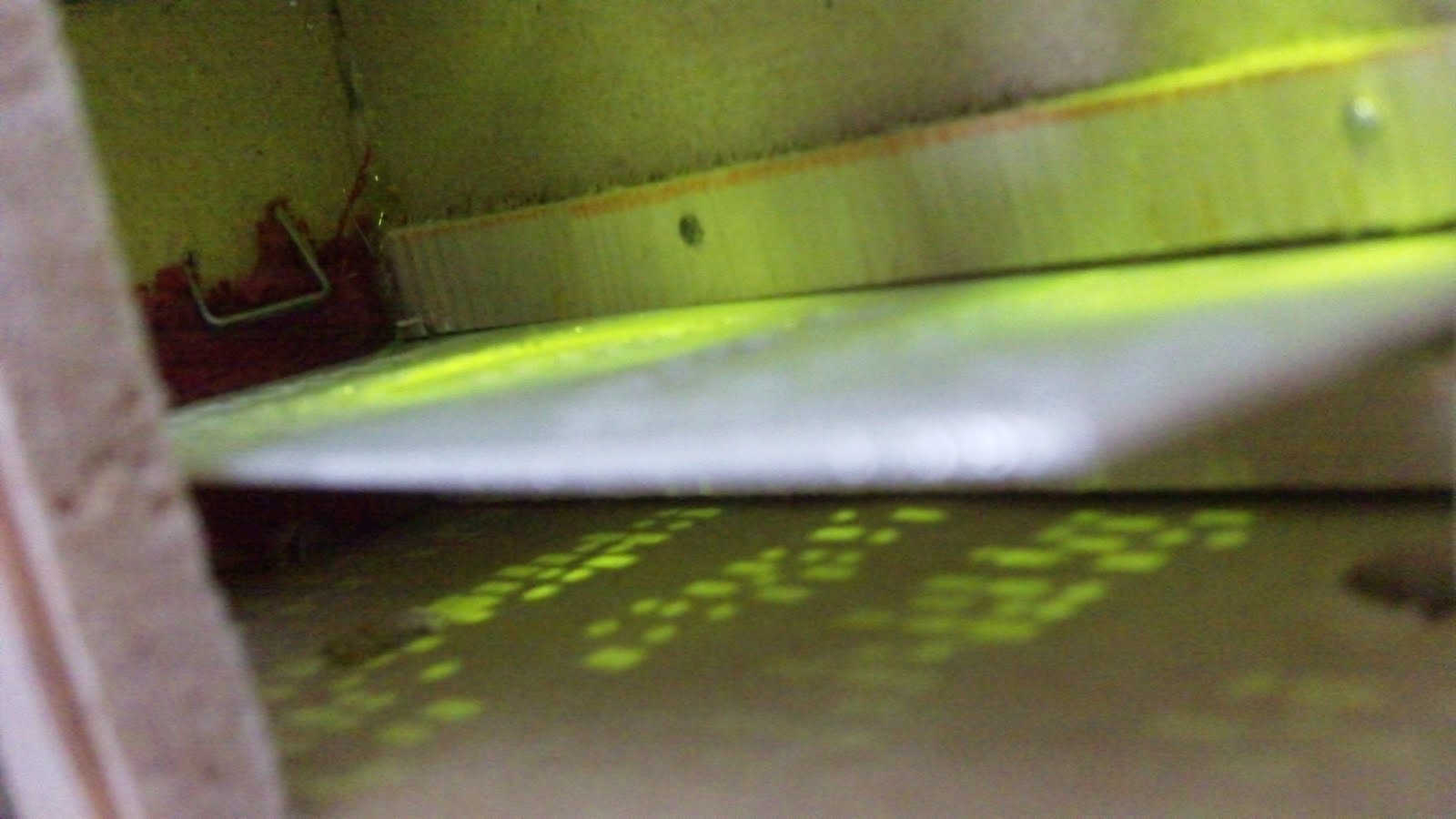
By using light and light sensors I enabled the device to pick up different punch cards depending on the light intensity that the LDRs picked up through each punch card and a small button to sense when a card was placed inside.

It was such an enjoyable project being able to get so absorbed in my historical research that I start to get in the mind set of an inventor from that time and the chance to make our project so believable that it was not only convincing but also brought about some really interesting discussions on how we use technology today.
Friday, 28 January 2011
OPERATION: Non Permanent Graffiti

So after cycling through the backstreets of Dundee and seeing all the graffiti covered walls, it got me thinking why do people graffiti? do kids just do it because they are bored? or for other reasons?
For me growing up as a kid in the countryside we spent many an afternoon building tree houses, shelters and making our surroundings into a play ground.

The countryside is flexible and if your break or build something nature rapidly heals and re claims your creation and their is no mess left behind.
But in the city, structures and spaces are permanent and inflexible which is shared by a lot of people, if you make something through play, it doesn't get absorbed or naturally reclaimed it sits their and either looks messy or takes a very long time to be reclaimed. If only the city was
growing and was a living organism.
Although it seems peoples sense of fun is ruled by regulations in some cities, Ive been told by park rangers on the edge of cities after taking groups to build shelters that we shouldn't do it, even in a secluded area away from everything? no wonder kids in cities graffiti there not allowed to do anything without someone barking at them and telling them they cant be having fun.
Rather than telling people they cant graffiti give them an alternative that meets the same need that permanent graffiti does.
So how about growing graffiti?
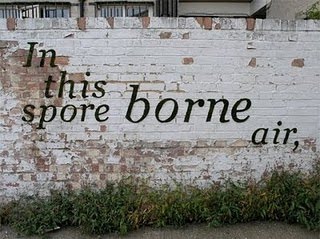

By mixing flour and moss in a blender which creates a paste you can grow graffiti on walls, which is a much more natural way of re claiming space and makes your environment more green and healthy.
When I was traveling in America I saw a lot of kids doing street art through the use of Chalk, it looks beautiful and really brightens up a street and is non permanent, as soon as it rains you are left with a fresh canvas.
Chalk Graffiti, but how?


Things you need:
Cornstarch
Mixing bowl
Small measuring bowls
Food coloring
Paintbrushes
1
Pour 1/4 cup cornstarch into a mixing bowl.
2
Add 1/4 cup cold water to the mixing bowl.
3
Stir the cornstarch and water until smooth. This may take a few minutes because of the thickening properties of cornstarch.
4
Divide the cornstarch and water mixture into small measuring bowls. Use one bowl for each color you will make.
5
Add a few drops of food coloring to each pinch bowl.
6
Mix food coloring into the cornstarch and water mixture. The liquid sidewalk chalk is now ready to be applied to the sidewalk.
7
Use paintbrushes or sponges to apply the liquid sidewalk chalk to the sidewalk or driveway.
8
Clean the sidewalk or driveway with a hose or sprinklers when it is time for the sidewalk chalk to be removed.
Simple ;D
Now that you have liquid Chalk how cool would it be to be able to leave chalk art as you cycle.
This is where ConTrail comes in which is a device that attaches to your bike and leaves a stream of colourful chalk so you can see where other cyclists have been.
Unfortunately it was never put into production but here are a few images and my PLAN TO BUILD ONE!!
Initial ideas by ConTrail


ConTrail proposed that to actually construct the devices they would cost £1000 each!!!
So here is my plan to make a cheaper fun chalk stream device for everyone.
Right so Ill need some sort of container to hold the mini wheel and chalk tray which im going to use a chain cleaner.

Chain cleaner- approx £4 to £8 each
Then I need a old plastic drinks bottle (which will sit in the drinks holder on the bike) and some tubing to run the liquid chalk to the chain cleaner.

Drinks bottle- £1
Tube-£2
Also some tree ties to hold the chain cleaner on-30p
After a bit of modification I should be able to get it to work, if there is not enough pressure I might need to make a mini pump which should be easy enough.
Will update once Ive got the thing up and running, cant wait to try it out.
Friday, 31 December 2010
Leather Christmas Creation's
This Christmas I thought It would be nice to make a lot of my Christmas presents by hand instead of just buying them.
Making them yourself gives them a little more of a personal touch. I thought I would use my new found skill of leather tooling to achieve this.
Here are the results, which i think were quite successful.
Leather coin Purses(Toggle lock);


Clan coaster;

Oak Napkin rings;


Key fobs;


Leather Coin purse(Velcro);


What do you think?
Making them yourself gives them a little more of a personal touch. I thought I would use my new found skill of leather tooling to achieve this.
Here are the results, which i think were quite successful.
Leather coin Purses(Toggle lock);


Clan coaster;

Oak Napkin rings;


Key fobs;


Leather Coin purse(Velcro);


What do you think?
Saturday, 27 November 2010
How are brain defines us and our environment
This is a powerful story about how our brains define us and connect us to the world and to one another.
Neuroanatomist Jill Bolte Taylor had an opportunity few brain scientists would wish for: One morning, she realized she was having a massive stroke. As it happened -- as she felt her brain functions slip away one by one, speech, movement, understanding -- she studied and remembered every moment.
http://www.youtube.com/watch?v=UyyjU8fzEYU
Neuroanatomist Jill Bolte Taylor had an opportunity few brain scientists would wish for: One morning, she realized she was having a massive stroke. As it happened -- as she felt her brain functions slip away one by one, speech, movement, understanding -- she studied and remembered every moment.
http://www.youtube.com/watch?v=UyyjU8fzEYU
Healing Earth
Amazing words on how we might heal our earth from our indigenous ancestors
http://vimeo.com/16812713
http://www.ashtarcommandcrew.net/video/kiesha-in-zurich-please
http://vimeo.com/16812713
http://www.ashtarcommandcrew.net/video/kiesha-in-zurich-please
Subscribe to:
Posts (Atom)