Thursday, 24 November 2011

Beautiful recycled glass lamp

Here is a nice idea for a funky lamp:


Materials:
Glass jar
broken coloured glass
light bulb with switch and cable or leds

You could even do it on a massive scale as a way of getting people to recycle glass in a fun way.


Do we own products or do they own us?

As it draws nearer to Christmas and I am bombarded with the shop shop buy buy attitude. Ive come to the point where actually I want less, I want to get rid of what I have as some of it I don't really need. I want an experience or a chance to discover something new as apposed to another item taking up space. Gifts that you can eat are great as they give you energy and the idea is that you consume it and there is nothing left to take up space.


(how are you meant to use this desk?)


This thought came to me...


We don't own resources, they own us. The more resources and products that we "own" the more they own us and encourage us to want more and more and to fill up our lives with things.


The more we own the less freedom we have and the more we become tied down enabling us to find it more difficult to travel and discover new experiences.


True freedom comes from, experiences with oneself, nature or with fellow humans.

Discovery, harmony and knowledge are really what makes me happy.

Pleasure from Creation and destruction

Why do we get enjoyment from creation as well as destruction?
Lamborghini 2011

Our instinct to create is just as powerful as our need for destruction which is why we get a similar buzz when we create things as when we destroy things.

If we kept everything there would be no space for new creations. It seems like the more we create means we have to be more destructive, is this the same way we treat the entire planet?

In life it is important to break things down and dispose of things, otherwise you can't create new things but the issue is we source materials from all over the world so they can't get back easily to where they came from.


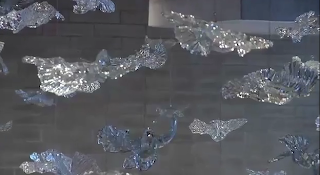
it reminded me of some artwork I had seen awhile back of a man who made hand blown glass doves the released them in the air.

and similar artwork by artist Julie Oakes

Monday, 24 October 2011

Portable Jar garden for camping

I found an article about sprouting jars for carrying on camping trips from Lip smacking backpacking- how to cook on your travels book and thought I would share it with you.


Also a nice recipe using the sprouts in pulp patties:


Wednesday, 19 October 2011

Saturday, 24 September 2011

Future of degradable petroleum plastic goes up in smoke

So the organic additive I thought as being the holy grail of making petroleum plastic degrade turns out to have rather negative consequences.

Fish seem to rather like the look of degradable plastic flakes as they look allot like Plankton.


Defra has shown concern "that these particles of plastic may be ingested by invertebrates, birds, animals or fish".

After contacting The Coop about using bio plastic I received this message:

"Until recently, all our carrier bags and some other plastic wrappers were degradable which meant they were not suitable for recycling as general plastic.

DEFRA commissioned a report that said that degradable additives in plastics offer no environmental benefit and therefore we have stopped using degradable additives in carrier bags, and we are running through the old stock.

Research casts doubt over green credentials of "degradable" plastics - 11 Mar 2010 - News from BusinessGreen

http://randd.defra.gov.uk/Document.aspx?Document=EV0422_8858_FRP.pdf%20


So there goes that plan of saving the world from the curse that is petroleum plastic. It seems to suggest any sort of throw away petroleum plastic is a curse.


So what now?

Maybe Its time to introduce corn starch and potato starch plastic which is food safe.


Polylactic acid is a polyester derived from corn starch which decomposes in 4 months and mineralizes into water and carbon dioxide when composted.

Sunday, 18 September 2011

biodegradable plastic

The past few weeks Ive been disturbed by the amount of waste in my bin which is just plastic packaging. So I spent a week or so seeing how easy it would be to shop for food without plastic packaging, which proved very challenging and restrictive, I thought vegan's had it hard.

I began to look at alternate forms of packaging and discovered plastic can be made with starch, so I set out to make plastic from potato starch, vegetable oil and water.
I had varying successes but it did make me think that producing plastic from potatoes would mean wasting an awful lot of food although a better option than having petrolium based plastic lying around for decades.
I also discovered that designers have started to produce disposable cutlery made out of potato starch and from the shells of cashew nuts which is great as it is a bi product as apposed to using food. Designers have also been making shopping bags made of a biodegradable polymer derived from lactic acid( the bi product of anarobic respiration in humans and animals).

Then I stumbled across D2W(metal salt) and eco-one which are organic additives which can be added to all petrolium based plastics and make it biodegrade into organic units which can be digested by bacteria.


http://uk.ecologic-llc.com/

The icing on the cake is that with D2w depending on how much you add you can set an expiration date on how long the plastic lasts for before it decomposes e.g. 5 months, 4 years.
Which is great because it means depening on the products life cycle it can be given an expiration date or controlled life and begin to decompose after it has been disposed off.
The plastic can also be recycled if it is gathered before the d2w has taken effect.
Plastic is designed to completely degrade between 60 to 90 days once the d2w has been activated and then breaks down in the soil releasing its carbon and nutrients to the plants.
D2w can be added to any plastic and doesn't even require changes to designs or suppliers techniques or machinery.


If you wish to understand the chemistry behind d2w check out the link below: