So today I went on an art of living yoga class, normally what you think of when someone say Yoga is loads of complex stretches and feeling knackered from having to hold a complex lotus flower position.
But the art of living classes are very different, they are more about learning to create a connection with yourself and others through breathing exercises...watch the video and see how... it explains it rather well I think;
Thursday, 17 February 2011

Life Belt-memorys and stories
I thought it was time to share my pride and joy that is my Life belt.
It took me about 2 weeks to finish and here it is.

Now unlike a normal belt that has the simple function of holding your breaches up, it functions also as a story telling device and " the most personal Item ive ever seen in my life" Madeleine Wilson
I use it to record important experiences and places in my life, as you can probably guess I got the idea from Christopher McCandless (into the wild);

Bennachie the mountain range behind my home where I grew up

My first big trip Away to Malawi to renovate a school

My first solo trip away to Canada to learn the process of Totem pole building

My solo hike through the beautiful Grand Canyon

Swimming with turtles in Hawaii

Solo Climb mount Fuji and staying in a Buddhist temple
Images and logos;


It functions also as a way of remembering information like telling direction;

and allows me to remind myself about the things that really matter;

The belt buckle was reclaimed off a sad old belt at a charity shop, so hopefully Ive given it a new lease of life.

It took me about 2 weeks to finish and here it is.

Now unlike a normal belt that has the simple function of holding your breaches up, it functions also as a story telling device and " the most personal Item ive ever seen in my life" Madeleine Wilson
I use it to record important experiences and places in my life, as you can probably guess I got the idea from Christopher McCandless (into the wild);

Bennachie the mountain range behind my home where I grew up

My first big trip Away to Malawi to renovate a school

My first solo trip away to Canada to learn the process of Totem pole building

My solo hike through the beautiful Grand Canyon

Swimming with turtles in Hawaii

Solo Climb mount Fuji and staying in a Buddhist temple
Images and logos;


It functions also as a way of remembering information like telling direction;

and allows me to remind myself about the things that really matter;

The belt buckle was reclaimed off a sad old belt at a charity shop, so hopefully Ive given it a new lease of life.

Leather wristbands versus silicone wrist bands
After having finished my travel Belt, I decided to make some leather bracelets for a skill share I was running for people and planet.


after I had finished the product, I thought how wonderful they looked but also a lot of other thoughts came to mind...
How great it was to be able to personalise items that can be worn to express yourself, Its almost like removable tattoos. They will last as long as a tattoo but don't require a big horrible laser to zap your skin with when you want to take them off.


You could even use leather designs as a way of testing out whether you really liked the design enough to have it tattooed on you for the rest of your life.

Another use could be for Medical Id tags which could be easily made and would last a life time, rather than making them out of metal which is uncomfortable you could make them out of leather. You could even personalise them so they look more like a fashion item rather than a clinical tag.
The one issue that comes up for leather craft is how ethical and environmentally friendly is it?
I have the belief that its better to use ever part of the animal rather than waste it, otherwise it is a disrespect to the animal.
 Would you prefer to wear a silicone or plastic wristband? that has had to be drilled for and causes great harm to the earth? which will never break down if you ever decide to get rid of it or loose it...
and will just end up fill up landfill sites.
or leather that has been sourced from as a waste product of food, which requires no drilling, no toxic gas given off during the production process and if you want to pass it back into the earth it will just break down.

I know which one I would choose :D


after I had finished the product, I thought how wonderful they looked but also a lot of other thoughts came to mind...
How great it was to be able to personalise items that can be worn to express yourself, Its almost like removable tattoos. They will last as long as a tattoo but don't require a big horrible laser to zap your skin with when you want to take them off.


You could even use leather designs as a way of testing out whether you really liked the design enough to have it tattooed on you for the rest of your life.

Another use could be for Medical Id tags which could be easily made and would last a life time, rather than making them out of metal which is uncomfortable you could make them out of leather. You could even personalise them so they look more like a fashion item rather than a clinical tag.
The one issue that comes up for leather craft is how ethical and environmentally friendly is it?
I have the belief that its better to use ever part of the animal rather than waste it, otherwise it is a disrespect to the animal.
 Would you prefer to wear a silicone or plastic wristband? that has had to be drilled for and causes great harm to the earth? which will never break down if you ever decide to get rid of it or loose it...
and will just end up fill up landfill sites.
or leather that has been sourced from as a waste product of food, which requires no drilling, no toxic gas given off during the production process and if you want to pass it back into the earth it will just break down.

I know which one I would choose :D
Monday, 14 February 2011
Nick Vujicic
A very inspiring guy who has traveled all around the world, sharing his life story and his positive outlook on life with millions of people, speaking to a range of different groups such as students, teachers, youth, businessmen and women and entrepreneurs.
Have you heard his story yet?
If you haven't check out the video below and I challenge you not to be inspired!!
Have you heard his story yet?
If you haven't check out the video below and I challenge you not to be inspired!!
Sunday, 13 February 2011
The Art Of Origami and Poinsettia's
The art of Origami originates Japanese folk art which began in the 17th century AD. It all started by me wanting to buy some Poinsettia (christmas flowers) seeds

but found out they are very rare and most are propagated from cuttings, through this process of research I accidentally stumbled across an excellent video on how to make Origami flowers and came out with some really nice results using old scrap bits of paper and tissue paper to highlight them.
Here is my late night attempt, what do you think?

Tuesday, 1 February 2011
The Bainegramorator

The Bainegramorator
Alexander Bain
1917
Developed by Alexander Bain in late 1800's, the Bainegramorator was indeed a remarkable invention for its time. This power generated mechanical device used coded punch cards, on which the operator could record a voice message which was then sent and decoded using the Bainegramorator.
The Bainegramorator was deployed by the United States Army Signal Corps as a means to deliver messages to the front line in 1917 to counter communication problems. This was however short lived due to the rapid technological advancements in communication which still continues to this day.
Archive footage recovered by the Museum Of Lost Interactions Team
Fact or Fiction?
So some of you might not already know but the Bainegramorator didn't actually exist, this was my 3rd year design project as part of our Museum Of Lost Interactions exhibition.
After researching old audio technology and settling on WW1 as my chosen era.
I developed my main idea based on an old Field phone from a museum in Hemel Hempstead.
The Bainegramorator was deployed by the United States Army Signal Corps as a means to deliver messages to the front line in 1917 to counter communication problems. This was however short lived due to the rapid technological advancements in communication which still continues to this day.
Archive footage recovered by the Museum Of Lost Interactions Team
Fact or Fiction?
So some of you might not already know but the Bainegramorator didn't actually exist, this was my 3rd year design project as part of our Museum Of Lost Interactions exhibition.
After researching old audio technology and settling on WW1 as my chosen era.
I developed my main idea based on an old Field phone from a museum in Hemel Hempstead.

I based the technology story on the way gramophones pick up vibrations by running a stylus across the bumps on the surface of the record. My plan was to reproduce the idea of a stylus running across holes in my punch cards.
The finished artifact at the Museum Of Lost Interactions opening night:


On set filming archive footage:


How it really works?
Now the device may look like an antique communication device from the early 19th century but really its a shell made of scavenged parts filled with modern technology.
Check out the video below to find out how it all works:
I used a arduino, an mp3 trigger, LEDs, LDRS, a speaker and a old wind up torch to run my device.

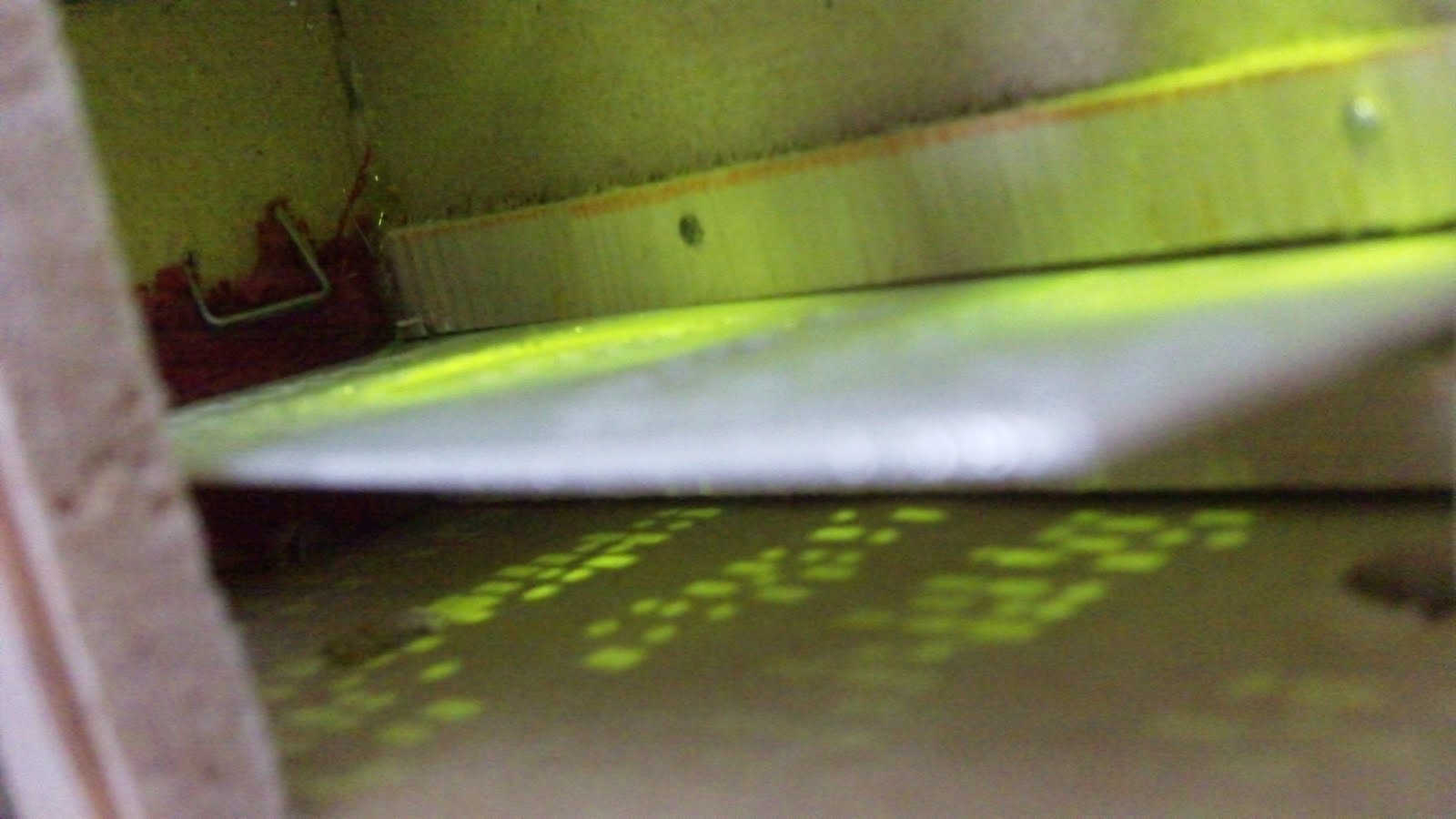
By using light and light sensors I enabled the device to pick up different punch cards depending on the light intensity that the LDRs picked up through each punch card and a small button to sense when a card was placed inside.

It was such an enjoyable project being able to get so absorbed in my historical research that I start to get in the mind set of an inventor from that time and the chance to make our project so believable that it was not only convincing but also brought about some really interesting discussions on how we use technology today.
Friday, 28 January 2011
OPERATION: Non Permanent Graffiti

So after cycling through the backstreets of Dundee and seeing all the graffiti covered walls, it got me thinking why do people graffiti? do kids just do it because they are bored? or for other reasons?
For me growing up as a kid in the countryside we spent many an afternoon building tree houses, shelters and making our surroundings into a play ground.

The countryside is flexible and if your break or build something nature rapidly heals and re claims your creation and their is no mess left behind.
But in the city, structures and spaces are permanent and inflexible which is shared by a lot of people, if you make something through play, it doesn't get absorbed or naturally reclaimed it sits their and either looks messy or takes a very long time to be reclaimed. If only the city was
growing and was a living organism.
Although it seems peoples sense of fun is ruled by regulations in some cities, Ive been told by park rangers on the edge of cities after taking groups to build shelters that we shouldn't do it, even in a secluded area away from everything? no wonder kids in cities graffiti there not allowed to do anything without someone barking at them and telling them they cant be having fun.
Rather than telling people they cant graffiti give them an alternative that meets the same need that permanent graffiti does.
So how about growing graffiti?
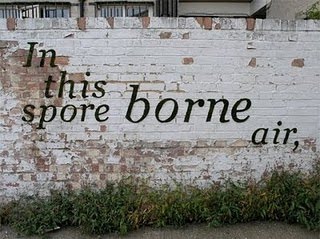

By mixing flour and moss in a blender which creates a paste you can grow graffiti on walls, which is a much more natural way of re claiming space and makes your environment more green and healthy.
When I was traveling in America I saw a lot of kids doing street art through the use of Chalk, it looks beautiful and really brightens up a street and is non permanent, as soon as it rains you are left with a fresh canvas.
Chalk Graffiti, but how?


Things you need:
Cornstarch
Mixing bowl
Small measuring bowls
Food coloring
Paintbrushes
1
Pour 1/4 cup cornstarch into a mixing bowl.
2
Add 1/4 cup cold water to the mixing bowl.
3
Stir the cornstarch and water until smooth. This may take a few minutes because of the thickening properties of cornstarch.
4
Divide the cornstarch and water mixture into small measuring bowls. Use one bowl for each color you will make.
5
Add a few drops of food coloring to each pinch bowl.
6
Mix food coloring into the cornstarch and water mixture. The liquid sidewalk chalk is now ready to be applied to the sidewalk.
7
Use paintbrushes or sponges to apply the liquid sidewalk chalk to the sidewalk or driveway.
8
Clean the sidewalk or driveway with a hose or sprinklers when it is time for the sidewalk chalk to be removed.
Simple ;D
Now that you have liquid Chalk how cool would it be to be able to leave chalk art as you cycle.
This is where ConTrail comes in which is a device that attaches to your bike and leaves a stream of colourful chalk so you can see where other cyclists have been.
Unfortunately it was never put into production but here are a few images and my PLAN TO BUILD ONE!!
Initial ideas by ConTrail


ConTrail proposed that to actually construct the devices they would cost £1000 each!!!
So here is my plan to make a cheaper fun chalk stream device for everyone.
Right so Ill need some sort of container to hold the mini wheel and chalk tray which im going to use a chain cleaner.

Chain cleaner- approx £4 to £8 each
Then I need a old plastic drinks bottle (which will sit in the drinks holder on the bike) and some tubing to run the liquid chalk to the chain cleaner.

Drinks bottle- £1
Tube-£2
Also some tree ties to hold the chain cleaner on-30p
After a bit of modification I should be able to get it to work, if there is not enough pressure I might need to make a mini pump which should be easy enough.
Will update once Ive got the thing up and running, cant wait to try it out.
Subscribe to:
Posts (Atom)